
"Arabian coffee trees"
1000 article(s) found

Introduction of mocha coffee beans
Mocha coffee (also known as mocha or mocha, also translated as Arabian quality coffee, English Caf Mocha, meaning chocolate coffee) is a variant of Italian latte (Caf Latt). Like the classic Italian latte, it usually consists of 1/3 espresso, mocha (Caff Espresso) and 2/3 foam.

Ethiopian Coffee introduction one of the major producers of Arabian coffee in Africa
Ethiopia is one of the major producers of Arabica coffee in Africa, producing the best Arabian coffee in the world. It is said that coffee was first discovered by shepherds in Essekafa, and the name of coffee evolved from Kafa, so Essex is still the hometown of coffee. The geographical environment of coffee production and processing is very suitable for coffee growth. Coffee is mainly cultivated.
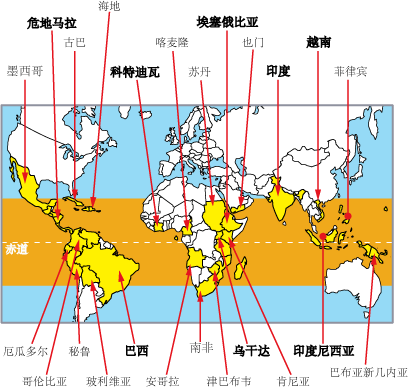
South American coffee producing countries
South American producer countries

Recommended by coffee and bean producing countries of Reunion
In 1715, the first coffee trees (about 40) were transported from the Yemeni port of Moka to La Runion, but unfortunately only two survived. By 1719, coffee plantations had flourished and the first beans were sold. Over the next few years, the government took a hard measure: the islanders, black and white, had to plant 100 coffee trees a year. The law was amended in 1723

Coffee producing area-- Reunion
In 1715, the first coffee trees (about 40) were transported from the Yemeni port of Moka to La Runion, but unfortunately only two survived. By 1719, coffee plantations had flourished and the first beans were sold. Over the next few years, the government took a hard measure: the islanders, black and white, had to plant 100 coffee trees a year. The law was amended in 1723

Where is the origin of Yemeni coffee?
Professional baristas exchange please follow the coffee workshop (Wechat official account cafe_style) Yemen is the world-famous hometown of coffee. Before the 6th century AD, Yemen was called Arab, so coffee trees shipped from Yemen to other places were also called Arabian coffee trees. But the origin of these trees is Ethiopia, and the Dutch spread the seeds of these coffee trees around the world.
Ugandan Coffee introduces Kerry
The Republic of Uganda, located in eastern Africa, is a landlocked country across the equator. Uganda is bordered by Sudan to the north, Kenya to the east, Lake Victoria to the southwest, Tanzania and Rwanda to the south, and Congo to the west. The territory is located between the east and west branches of the East African Rift Valley, tilting gently from west to middle and low and flat in the south. Margarita Peak is 5109 meters above sea level, which is the highest in the country.

Introduction to the flavor cooking methods of Yunnan small seed coffee beans
Professional barista communication please pay attention to the coffee workshop (Wechat official account cafe_style) [scientific name] small seed Coffea arabica L family: Rubiaceae coffee genus [alias] small seed coffee, also known as Arabian coffee is rich in protein, fat, sucrose, starch, caffeine and other substances, made into a beverage with rich aroma, delicious taste and rich nutrition.
Producing countries in South America
Brazil Brazil is the first coffee producer and marketer in the world. The annual output of coffee beans exceeds 30 million bags (60 kilograms each). Coffee experts do not think highly of their beans, saying that they are too monotonous, bitter, sour and fragrant enough, and are not even included in the list of producing areas of fine coffee. Because most of the Brazilian coffee gardens are less than 1200 meters above sea level, there are no big trees to shade, and they are picked.
Coffee beans, Ugandan Coffee, Cry.
The Republic of Uganda, located in eastern Africa, is a landlocked country across the equator. Uganda is bordered by Sudan to the north, Kenya to the east, Lake Victoria to the southwest, Tanzania and Rwanda to the south, and Congo to the west. The territory is located between the east and west branches of the East African Rift Valley, tilting gently from west to middle and low and flat in the south. Margarita Peak is 5109 meters above sea level, which is the highest in the country.
Introduction to Ugandan Coffee-Kerry
The Republic of Uganda, located in eastern Africa, is a landlocked country across the equator. Uganda is bordered by Sudan to the north, Kenya to the east, Lake Victoria to the southwest, Tanzania and Rwanda to the south, and Congo to the west. The territory is located between the east and west branches of the East African Rift Valley, tilting gently from west to middle and low and flat in the south. Margarita Peak is 5109 meters above sea level, which is the highest in the country.

Description of Ecuadorian Coffee Flavor with Flower and Fruit Flavor introduction to the treatment of Grinding degree in Variety producing areas
Ecuador is located in South America, the equatorial line runs through the country, so Ecuador is also known as the equatorial country. Ecuador's superior geographical location, fertile soil and special climatic conditions have created a superior natural environment for coffee cultivation in the country. Ecuador is one of the few countries in the world that can produce both Arabica and Robusta coffee beans. Ecuador is the world.
Coffee producing area Coffee introduction Reunion Coffee
Is no longer the hometown of bourbon Arabica coffee beans. In 1715, the first coffee trees (about 40) were transported from the Yemeni port of Moka to La Runion, but unfortunately only two survived. By 1719, coffee plantations had begun to flourish and the first coffee beans were sold. Over the next few years, the government took a hard measure: the islanders, whether black or white, had to
The characteristics of Arabica beans coffee producer reunion coffee beans reunion
Reunion is no longer the hometown of bourbon Arabica coffee beans. In 1715, the first coffee trees (about 40) were transported from the Yemeni port of Moka to La Runion, but unfortunately only two survived. By 1719, coffee plantations had begun to flourish and the first coffee beans were sold. Over the next few years, the government adopted a rigid measure: no matter whether the island's residents were black or black.

The hometown of bourbon Arabica coffee beans, reunion coffee beans in Yemen
Is no longer the hometown of bourbon Arabica coffee beans. In 1715, the first coffee trees (about 40) were transported from the Yemeni port of Moka to LaRunion, but unfortunately only two survived. By 1719, coffee plantations had begun to flourish and the first coffee beans were sold. Over the next few years, the government took a hard measure: the islanders, whether black or white,
La Reunion Reunion, a coffee producer in the world
Is no longer the hometown of bourbon Arabica coffee beans. In 1715, the first coffee trees (about 40) were transported from the Yemeni port of Moka to La Runion, but unfortunately only two survived. By 1719, coffee plantations had begun to flourish and the first coffee beans were sold. Over the next few years, the government took a hard measure: the islanders, whether black or white, had to
Starting with Coffee beans (45)-Asia-Reunion
Is no longer the hometown of bourbon Arabica coffee beans. In 1715, the first coffee trees (about 40) were transported from the Yemeni port of Moka to La Runion, but unfortunately only two survived. By 1719, coffee plantations had begun to flourish and the first coffee beans were sold. Over the next few years, the government took a hard measure: the islanders, whether black or white, had to
Reunion is no longer the hometown of bourbon Arabica coffee beans.
Is no longer the hometown of bourbon Arabica coffee beans. In 1715, the first coffee trees (about 40) were transported from the Yemeni port of Moka to LaRunion, but unfortunately only two survived. By 1719, coffee plantations had begun to flourish and the first coffee beans were sold. Over the next few years, the government took a hard measure: the islanders, whether black or white,
Coffee beans Asian Reunion
No longer home to bourbon arabica beans. In 1715, the first coffee trees (about 40) were transported from Mocha port in Yemen to La Runion, but unfortunately only two survived. By 1719, coffee plantations were flourishing and the first coffee beans were sold. In the years that followed, the government adopted a rigid measure: every inhabitant of the island, black or white, had to

Introduction of Ecuador Coffee individual Coffee Flavor Manor
The Arabian Coffee Tree was first introduced to Ecuador (Ecuador) in 1952 and its coffee is of good quality, especially the coffee harvested in early June. Ecuadorian coffee beans can be divided into two varieties: Galapagos and Gigante, both of which have the characteristics of large granules and heavy weight. Ecuadorian coffee can be divided into first class (No.1) and super excellent (ExtraSuperior) according to its quality.